


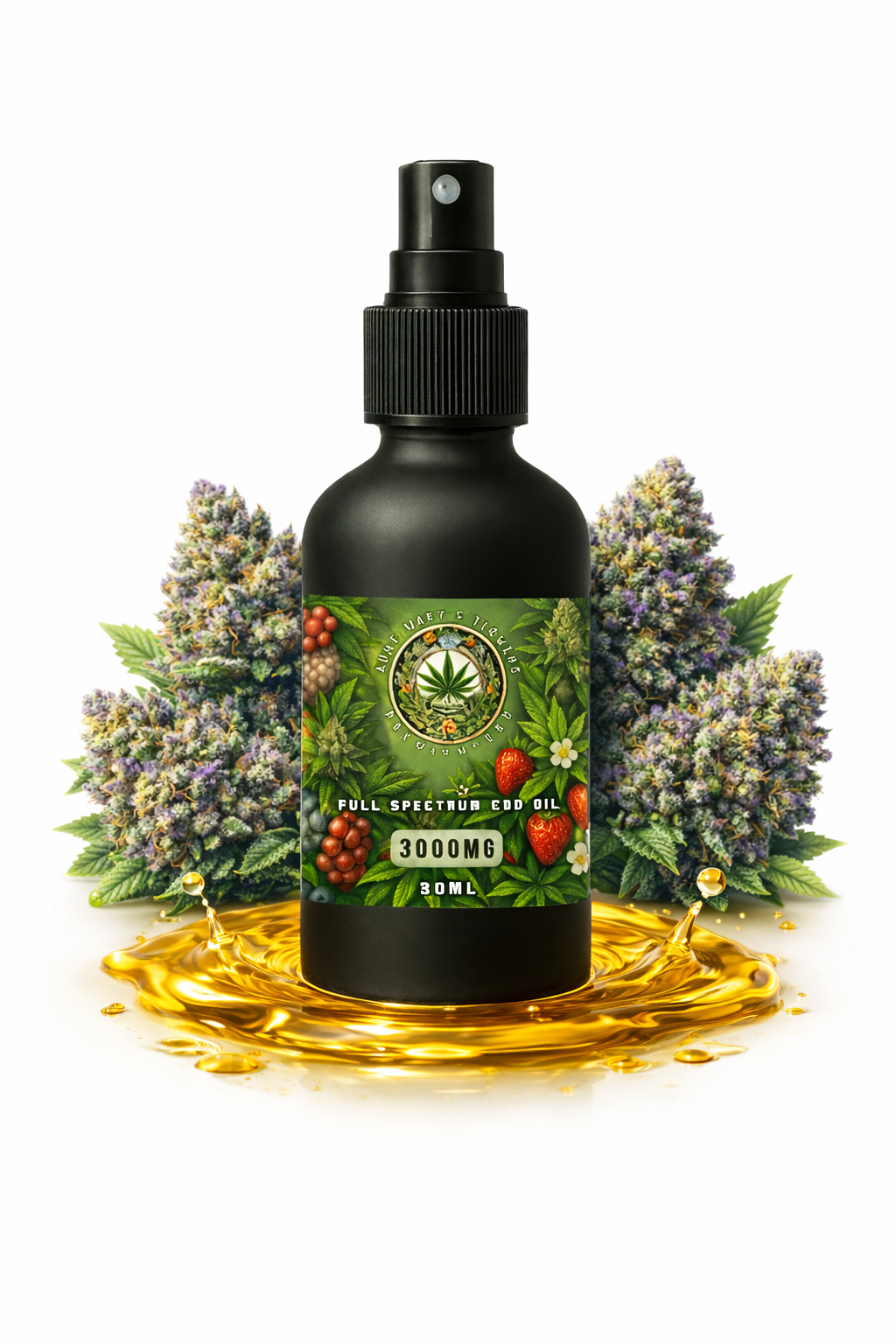
You have bought a CBD product, followed the instructions and waited for something noticeable to happen—but you cannot feel anything.
Does that mean the CBD is not working? Is the product too weak? Have you chosen the wrong type?
The first thing to understand is that CBD is not supposed to produce the obvious intoxicating “high” associated with THC. For many people, CBD does not create an immediate or dramatic physical sensation at all.
This can make the experience confusing, particularly for someone who expects CBD to feel similar to conventional cannabis.
There are also many different types of CBD products available. A CBD oil, edible product, extract and CBD flower can differ considerably in their formulation, concentration and intended use.
Here are seven possible reasons you may not feel anything after taking CBD, along with the important checks every customer should make.
What Is CBD Supposed to Feel Like?
There is no single sensation that proves a CBD product is “working”.
Some customers describe their experience as subtle, while others notice no identifiable feeling. Individual experiences vary considerably, and a person’s expectations can strongly influence how they judge a product.
CBD and THC are both cannabinoids, but they are not the same compound. THC is the cannabinoid primarily associated with cannabis intoxication and feeling high. A genuine CBD product should therefore not be judged solely by whether it produces a strong cannabis-like sensation.
It is also important to separate individual customer experiences from proven health outcomes. CBD food products should not be advertised as treating, preventing or curing medical conditions.
1. You Are Expecting CBD to Make You Feel High
One of the most common reasons people believe CBD is not doing anything is that they are waiting for a “high”.
CBD is frequently associated with cannabis because it originates from hemp or cannabis plants. However, the strong intoxicating feeling associated with conventional cannabis comes mainly from THC—not CBD.
You should not normally expect CBD to produce:
- A euphoric rush
- Strongly altered perception
- Significant intoxication
- An immediate cannabis-style high
If your main test is, “Do I feel stoned?”, a legitimate CBD product may appear to be doing nothing.
This is also why taking more CBD simply to chase an obvious sensation is not a sensible way to assess a product.
Our CBD flower collection, including strains such as Mango Haze and Jungle Cookies, contains products with different cannabinoid and terpene profiles. However, customers should not expect CBD-rich hemp flower to reproduce the intoxicating effects associated with high-THC cannabis.
2. The Experience May Be More Subtle Than You Expected
CBD is often discussed online using dramatic language. Customers may be led to expect an immediate transformation after using a few drops or trying one product.
In reality, there may be no dramatic moment when you suddenly “feel CBD”.
A better question may be:
“What was I expecting to notice, and is that expectation realistic?”
Avoid treating every normal change in mood, energy or comfort as proof that CBD has produced an effect. Equally, do not automatically assume the product has failed simply because nothing dramatic happened.
Some people describe CBD as a product they incorporate into an established personal routine rather than something that produces an immediate, unmistakable sensation.
The experience remains subjective, and not everyone will report noticing anything.
3. You May Be Misreading the Product Strength
CBD labelling can be surprisingly confusing.
A bottle might display:
- The total CBD in the container
- The CBD percentage
- The CBD in each measured serving
- The total cannabinoid content
- The amount of liquid in millilitres
These figures are not interchangeable.
For example, “1,500mg CBD” will usually describe the amount of CBD contained in the entire bottle—not the amount contained in every drop.
Our 1500mg Full-Spectrum CBD Oil, for example, contains 1,500mg across a 30ml bottle. Customers still need to read the product information and understand the amount associated with the stated serving.
Likewise, a larger bottle containing more total CBD is not necessarily more concentrated than a smaller bottle. You need to consider both the bottle size and the amount of CBD it contains.
When comparing products, check:
- The total amount of CBD
- The size of the container
- The amount contained in the stated serving
- The manufacturer’s usage instructions
- Whether a laboratory report supports the label
- Whether you are combining it with other CBD products
Do not assume that the product with the largest number printed on the front will automatically create the strongest or most noticeable experience.
You can compare available strengths and formulations in our CBD oil collection.
4. The Product May Not Contain What You Expected
Product quality can vary considerably between brands.
The packaging may advertise a particular CBD strength, but responsible customers should look for evidence supporting that figure. This is where a Certificate of Analysis, commonly called a COA or laboratory report, becomes important.
A suitable laboratory report may help you check:
- The measured CBD content
- The presence of additional cannabinoids
- Whether controlled cannabinoids were detected
- The batch or sample number
- The date of testing
- The laboratory that completed the analysis
The batch number on the laboratory report should ideally correspond with the batch information attached to the product.
Customers can examine the available testing information on our CBD laboratory reports page.
Be cautious when a retailer:
- Does not provide any laboratory information
- Uses one report for every product
- Publishes an old or unreadable report
- Makes claims that are not supported by the report
- Cannot explain the difference between CBD content and total cannabinoid content
- Claims that a laboratory report guarantees a particular personal effect
A trustworthy CBD retailer should make it easier—not harder—to understand what you are buying.
5. Different CBD Product Types Are Not Identical
CBD is sold in many different forms, including:
- CBD oils
- CBD gummies
- Capsules
- Topical products
- Vape products
- CBD flower
- CBD extracts
These products are formulated and used differently.
You should not assume that an oil, gummy and flower product will provide an identical experience simply because each label displays CBD in milligrams.
The rest of the formulation also matters. Some products contain CBD isolate, while others contain a broader range of naturally occurring cannabinoids, terpenes and plant compounds.
CBD isolate
CBD isolate is a highly purified form of CBD from which most other cannabinoids and plant compounds have been removed.
Broad-spectrum CBD
Broad-spectrum products generally contain CBD alongside selected additional cannabinoids or plant compounds, with THC intended to be removed or reduced to non-detectable levels.
Full-spectrum CBD
Full-spectrum products contain CBD alongside a wider selection of naturally occurring plant compounds and cannabinoids.
These descriptions are not universal guarantees. Always examine the complete ingredient list and available batch testing rather than relying entirely on phrases such as “premium”, “full-spectrum”, “high-strength” or “THC-free”.
The product format you choose should be based on the actual formulation, instructions and your reason for considering CBD—not on which product promises the most dramatic experience.
6. You Have Only Tried CBD Once
Some customers use a CBD product once and immediately decide whether it has worked.
The difficulty is that a single experience does not always provide enough information to assess a product properly. Your expectations, the formulation, the amount used and the circumstances in which you used it can all influence your judgement.
However, this does not mean you should repeatedly increase the amount until you feel something.
For CBD sold as food or a food supplement, the Food Standards Agency currently advises healthy adults to limit their CBD intake to 10mg per day from all food sources.
This is precautionary guidance and should be considered alongside the product instructions.
More CBD is not automatically better, and feeling nothing is not a reason to ignore the label or official safety advice.
Remember to calculate CBD from every edible source you use during the day. This can include oils, gummies, drinks, capsules and other food-supplement products.
7. CBD May Simply Not Produce a Noticeable Effect for You
People do not all respond to the same products in the same way.
Your experience can be influenced by numerous factors, including:
- The actual product composition
- The amount of CBD contained in a serving
- The product format
- Your expectations
- Other products or substances being used
- Individual biological differences
- The accuracy of the product label
It is entirely possible to use a genuine CBD product and not identify a clear or noticeable sensation.
That does not automatically prove that the product is counterfeit. However, it also does not prove that something beneficial is happening without you noticing.
Be cautious of anyone who claims that CBD works for everyone or tells you that the only solution is to keep buying increasingly stronger products.
Should I Take More CBD If I Cannot Feel Anything?
You should not continually increase your intake simply to create a noticeable sensation.
Follow the product information and consider the FSA’s current advice that healthy adults should limit CBD consumption from food and food supplements to 10mg per day.
Taking several CBD products on the same day can make it difficult to calculate your total intake. For example, someone combining an oil with CBD gummies must consider the CBD contained in both products.
Remember that the FSA guidance relates to CBD consumed as food or food supplements. Different product categories can be subject to different rules and usage instructions.
Can CBD Interact With Medication?
CBD can affect how certain medicines work. Anyone taking prescription medication should seek appropriate medical advice before using CBD.
The Food Standards Agency also advises against CBD consumption for certain groups, including:
- Pregnant or breastfeeding women
- Children
- People trying to conceive
- People who are immunosuppressed
- People taking medication unless appropriate professional advice has been obtained
CBD products should not be used as a replacement for prescribed medication, diagnosis or professional medical treatment.
How Can I Tell Whether a CBD Product Is Good Quality?
Before buying or continuing to use a CBD product, check the following.
Read the complete label
Look beyond the largest number on the packaging. Identify the total CBD content, product size, ingredients and amount associated with the stated serving.
For an example of how total bottle strength is presented, view our 1500mg CBD oil product information.
Check the laboratory information
Look for recent and relevant cannabinoid testing. Visit our lab reports page to view the available product reports.
Read the ingredients
Find out whether the product contains CBD isolate, broad-spectrum CBD, full-spectrum hemp ingredients or additional botanical ingredients.
Research the retailer
Look for:
- Clear company information
- Contact details
- Product descriptions
- Ingredient information
- Laboratory testing
- Terms and conditions
- Responsible usage guidance
You can learn more about Aunt Mary’s Flowers and our approach on our About Us page.
Be cautious of medical promises
A CBD product should not be promoted as curing, preventing or treating a health condition.
Be wary of phrases such as:
- Guaranteed pain relief
- Cures anxiety
- Treats insomnia
- Works instantly
- Effective for everyone
- No possibility of side effects
Customer reviews and personal experiences are not the same as authorised medical evidence.
Follow official safety advice
Do not continually increase your intake because an online influencer, advertisement or review tells you to chase a stronger feeling.
Frequently Asked Questions
Does CBD make you feel high?
CBD is not the cannabinoid primarily responsible for the intoxicating high associated with cannabis. THC is the main intoxicating compound.
A CBD product should not be judged solely by whether it produces a strong cannabis-style sensation.
Why do I feel nothing from CBD oil?
Possible reasons include unrealistic expectations, confusing product labelling, variation between product types, low CBD per measured serving, poor product quality or simply not experiencing an identifiable effect.
Before changing products, check the concentration, ingredients, instructions and available laboratory information.
Does stronger CBD work better?
A larger number of milligrams does not automatically mean that a product is better or more appropriate.
Product size, concentration, serving information, composition and quality testing should all be considered.
You can compare different formulations in our CBD oil range.
How do I know whether my CBD is genuine?
Look for:
- A clear ingredient list
- An identifiable manufacturer or retailer
- Complete strength information
- Relevant laboratory testing
- Batch information where available
- Realistic product descriptions
View our available CBD lab reports here.
Should I keep increasing the amount until I feel it?
No. Do not ignore the label or official safety guidance in an attempt to produce a sensation.
The FSA currently advises healthy adults to limit CBD from foods and food supplements to 10mg per day.
Can everyone use CBD?
No. CBD may not be suitable for everyone.
People taking medication, pregnant or breastfeeding women, children, people trying to conceive and people who are immunosuppressed should pay particular attention to official guidance and seek appropriate professional advice.
Which type of CBD product should I choose?
The appropriate product depends on the formulation, ingredients, instructions and your personal preferences.
You can compare the main categories available from Aunt Mary’s Flowers:
Final Thoughts: Not Feeling CBD Does Not Always Mean the Product Is Faulty
CBD is not intended to provide the same intoxicating experience as THC, and there is no universal sensation that confirms a CBD product is working.
If you cannot feel anything, begin by checking:
- What you originally expected to feel
- The total CBD in the product
- The amount contained in a serving
- The complete ingredients
- The type of CBD used
- The available laboratory information
- Whether you are combining multiple CBD products
Most importantly, do not chase an effect by continually increasing your intake.
Choose transparent products, follow the stated instructions and view extravagant medical promises with caution.
A responsible CBD company should help you understand exactly what is contained in the product without claiming that CBD will produce guaranteed results for every customer.
Explore Aunt Mary’s Flowers
At Aunt Mary’s Flowers, we believe customers should be able to understand the strength, formulation and contents of the products they are considering.
Explore our current ranges:
This article is provided for general educational purposes and is not medical advice. CBD products are not intended to diagnose, treat, cure or prevent disease. Speak to an appropriate medical professional if you take medication or have concerns about using CBD.


